Creating products that resonate with a broad, diverse audience isn’t just good design, it’s smart business. Inclusive industrial design considers the full spectrum of human needs across age, ability, gender, culture, and experience level, helping companies unlock innovation, expand market reach, and build stronger customer connections.
At Sprout Studios, we believe designing for diversity is fundamental to great product design. With expertise in ergonomics, human factors, and visual brand language, we develop inclusive, user-centered products that are not only functional and beautiful, but built for real people in the real world.
Why Inclusive Industrial Design Matters for Product Success
Inclusive design is about designing with people, not just for them. It ensures that products are accessible, intuitive, and enjoyable for as many users as possible, regardless of physical ability, cultural background, or experience level.
From kitchen tools and wearable tech to medical devices and outdoor equipment, inclusive product design helps brands solve real-world problems, reduce usability barriers, and stand out in competitive markets. Products that work for more people don’t just perform better, they earn trust, adoption, and long-term loyalty.
Core Principles of Inclusive Product Design
Ergonomics and Human Factors
Inclusive design starts with understanding the human body and how people interact with products in real environments. Our team conducts ergonomic and human factors studies to ensure products accommodate a wide range of users—different hand sizes, mobility levels, grip strengths, and physical abilities.
A well-designed product should feel intuitive and comfortable without requiring users to adapt themselves to the object. When ergonomics are done right, usability improves, fatigue decreases, and products become more accessible by default.
Universal and Adaptive Features
Universal design principles aim to reduce barriers by making products usable by as many people as possible from the start. This can include modular components, adjustable features, simplified interfaces, or multi-functional solutions that adapt to different environments and user needs.
Designing flexibility into a product early expands usability, extends product lifespan, and reduces the need for costly redesigns later in development.
Cultural Relevance and Context
Products don’t exist in a vacuum. Cultural norms, behaviors, language, and aesthetic preferences all influence how a product is perceived and used. A product designed for a Western market may need different materials, interfaces, or form factors to succeed in Southeast Asia or other regions.
True inclusive design considers localization and cultural context as part of the product development process, ensuring products feel intuitive, appropriate, and relevant across markets.
CMF That Supports Accessibility
Color, material, and finish (CMF) choices play a critical role in inclusive product design. High-contrast color palettes can support users with visual impairments. Tactile finishes improve grip and provide sensory feedback. Material choices can influence comfort, durability, and sustainability perceptions.
At Sprout, we use CMF not just to enhance aesthetics, but to improve usability, accessibility, and overall product experience for diverse user groups.
How Inclusive Industrial Design Drives Market Growth and ROI
Inclusive product design isn’t just good ethics, it’s good business. Brands that invest in inclusive design often see measurable gains in market reach, customer loyalty, and revenue growth.
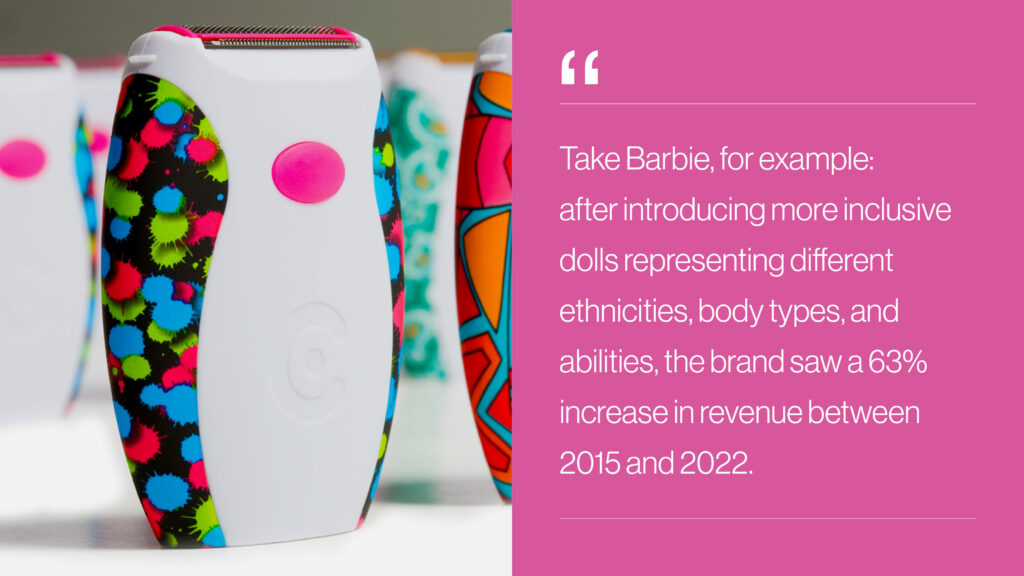
Take Barbie, for example: after introducing more inclusive dolls representing different ethnicities, body types, and abilities, the brand saw a 63% increase in revenue between 2015 and 2022. Inclusive product strategy wasn’t just a moral decision—it was a growth strategy.
Investing in inclusive industrial design delivers tangible business benefits across multiple areas, from revenue growth to brand perception:
- Greater Market Reach – Designing for more people opens access to new customer segments and global markets.
- Reduced Risk and Cost – Inclusive design from the outset means fewer redesigns, better accessibility compliance, and more efficient development cycles.
- Increased Customer Loyalty – Products that feel made for real people build stronger emotional connections and brand advocacy.
- Enhanced Brand Equity – Inclusive design signals values like empathy, responsibility, and forward-thinking innovation.
Sprout Studios’ Approach to Inclusive Industrial Design
Sprout has spent over two decades working at the intersection of industrial design, engineering, and user experience. Our multidisciplinary team brings a human-centered design lens to every project, from early concept development through production-ready execution.
We collaborate closely with real users to understand their needs, frustrations, and goals. Then we translate those insights into thoughtful, intentional design decisions—from overall form and ergonomics to button placement, grip texture, and material selection. The result is products that are not only functional and manufacturable, but meaningfully inclusive.
Design Inclusive, Market-Ready Products with Sprout
Inclusive industrial design isn’t a checklist, it’s a mindset. One that leads to better products, broader impact, and stronger connections with the people who use them.
At Sprout Studios, we design with intention, empathy, and precision to help companies bring inclusive, market-ready products to life.