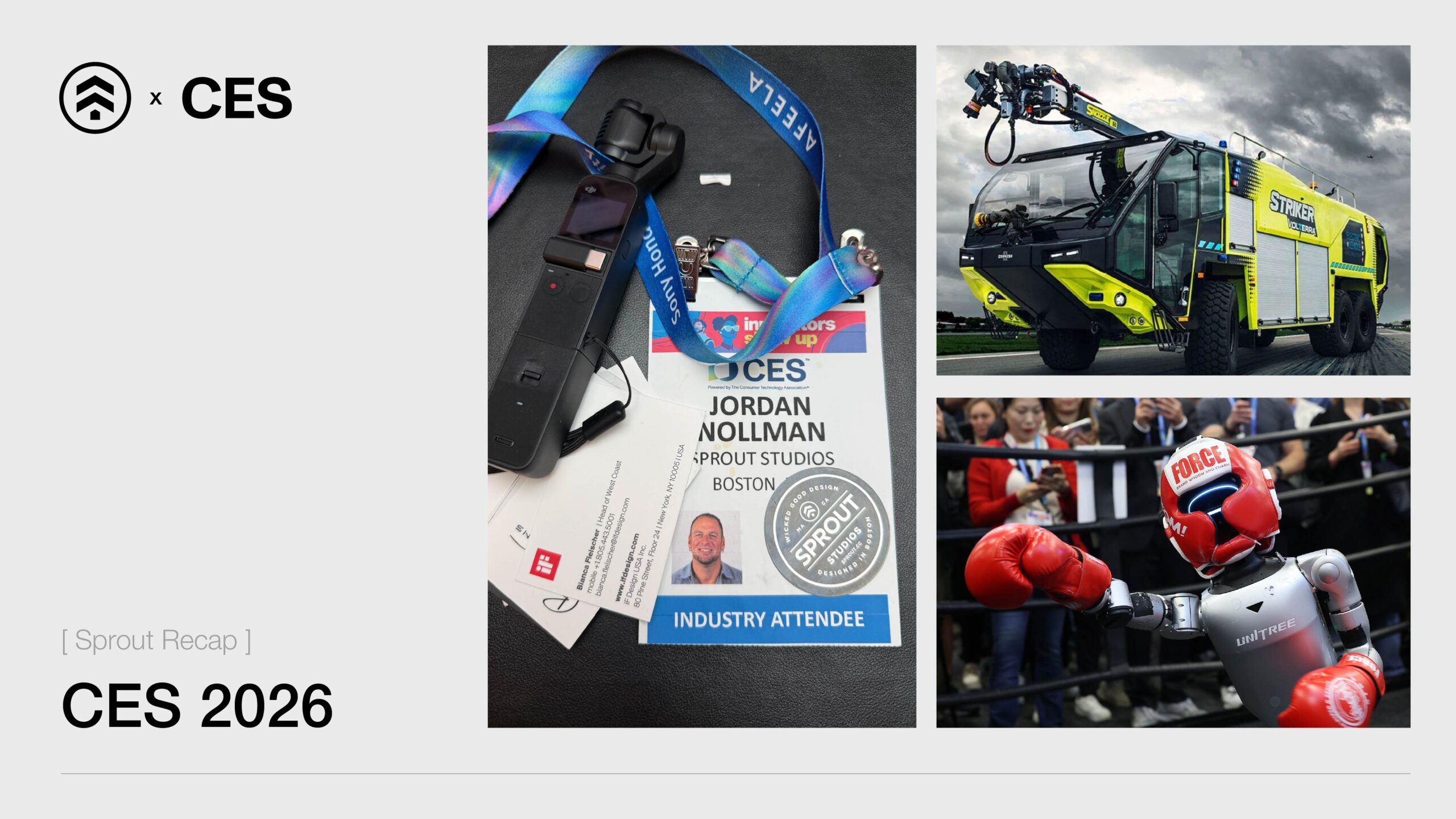
CES 2026 felt less like a breakthrough moment and more like a mirror — reflecting where industries are clustering, copying, and cautiously experimenting.
There were fewer centralized “wow” moments and more parallel threads running at once. Walking the halls, you could feel both ambition and hesitation. Underneath it all, though, a few clear patterns emerged.
Here’s how the show organized itself from my perspective, and what it means.
Artificial Intelligence: AI, Chips & the Illusion of Intelligence
AI was everywhere at CES — mostly as a label, not a capability.
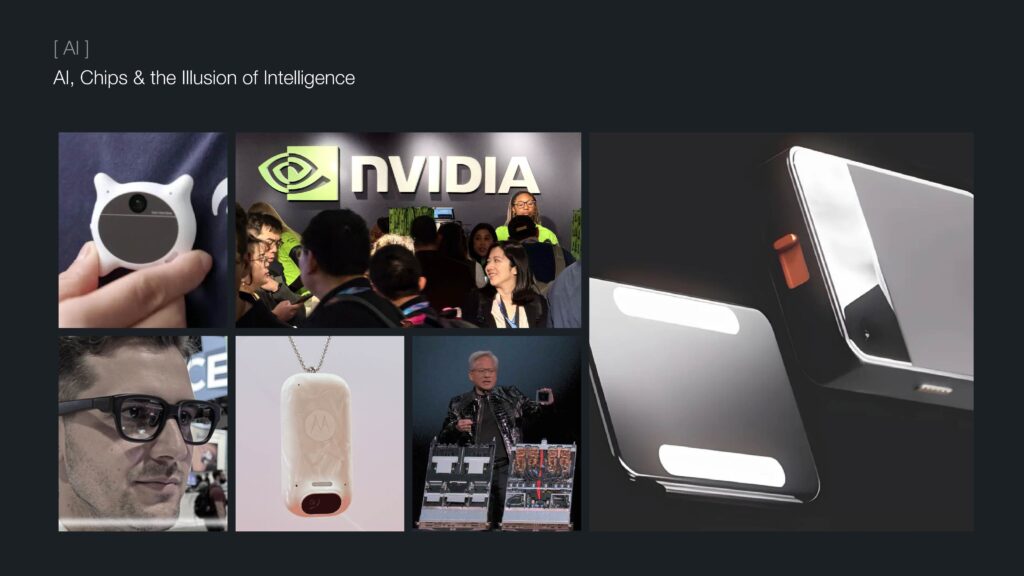
Nearly every product claimed to be “AI-powered,” but few had the infrastructure to support it. The real AI story wasn’t in gadgets, it was in silicon.
NVIDIA’s influence was unmistakable. As Jensen Huang, President and CEO of NVIDIA, has said, AI is no longer a feature, it’s a new computing platform, and GPUs remain the factories behind it. AMD is also closing the gap, especially with more efficient AI accelerators, signaling a future where AI compute becomes more distributed and competitive.
The contrast was stark.
On one end:
- Large-scale AI chips and serious compute
- Infrastructure built to actually run models
On the other:
- Pendants, wearables, and small devices promising intelligence they can’t realistically deliver
Most of these products don’t harness AI — they gesture at it, leaning on cloud calls and branding rather than real on-device capability.
CES made it clear: we’re still in the infrastructure chapter of AI, not the consumer breakthrough chapter.
Signals:
- Honest system thinking will separate signal from noise
- Real AI starts with chips, not slogans
- NVIDIA sets the pace; AMD is a credible challenger
- Many “AI” products are underpowered by design
Robots Everywhere: From Infrastructure to Absurdity
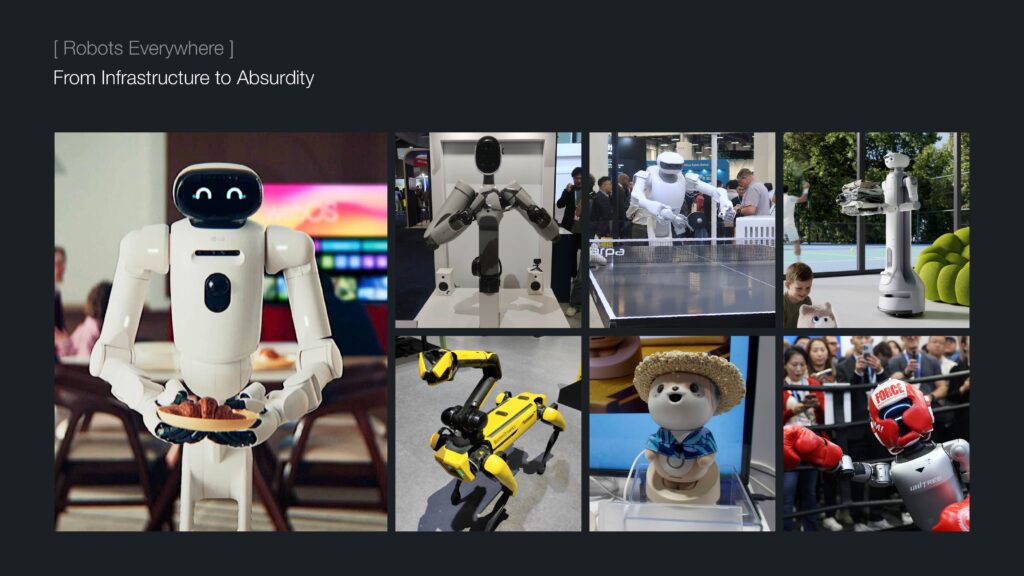
Robots were unavoidable.
Service robots.
Industrial robots.
Companion robots.
Warehouse, delivery, hospitality. All of it.
LG, Hyundai, and others leaned hard into robotics as a future narrative. The forms are improving. The capabilities are getting more refined. But for the most part, the experiences still lag behind the promise.
This category feels like it’s shifting from novelty to infrastructure, which means differentiation now comes down to design, storytelling, and clarity of purpose.
That said, CES also does what CES does best: it shows the full spectrum.
At one end, you could see genuinely thoughtful progress.
At the other? An all-time worst-in-show contender: a robot vacuum paired with a drone companion designed to pick it up and move it between floors. A ridiculous solution to a problem no one has ever had, and a perfect reminder that not everything that’s possible is necessary.
The line between visionary and pointless is still very thin.
Signals:
- Storytelling is now the primary differentiator
- Robotics is moving from novelty to infrastructure
- Experience design matters more than hardware capability
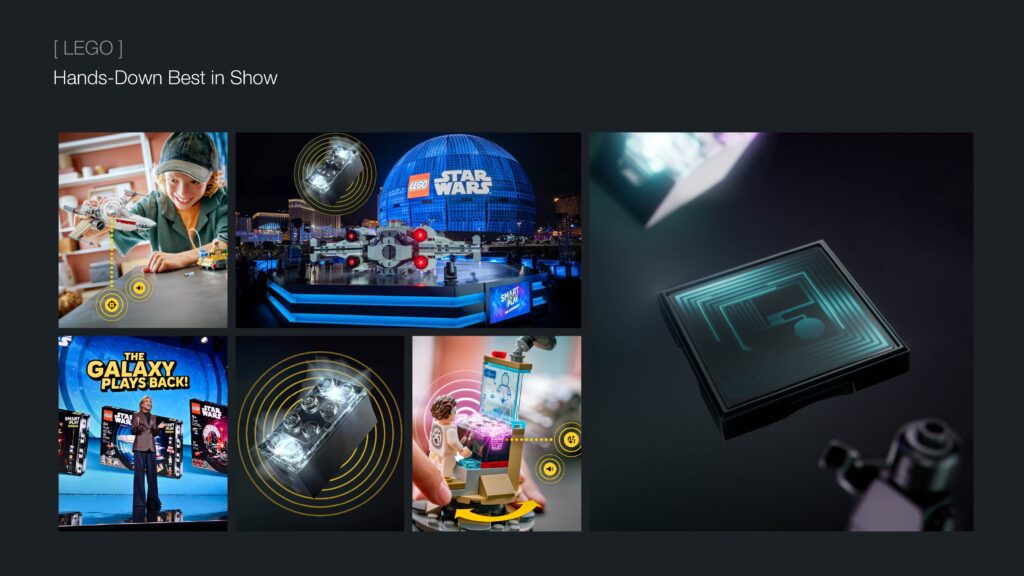
LEGO: Hands-Down Best in Show
LEGO brought me to design in the first place, and this year at CES, LEGO was the clear standout.
Not just because it was polished but because it delivered something rare: something new, something meaningful, and something genuinely fun.
The keynotes landed. The presence was confident. And the product thinking reminded everyone that play, creativity, and imagination still matter, even (especially) in a tech-heavy environment.
LEGO didn’t just show a product. They told a story people wanted to be part of.
That’s the bar.
Signals:
- Great storytelling still cuts through the noise
- Playfulness is a strategic advantage
- Emotional connection beats feature lists
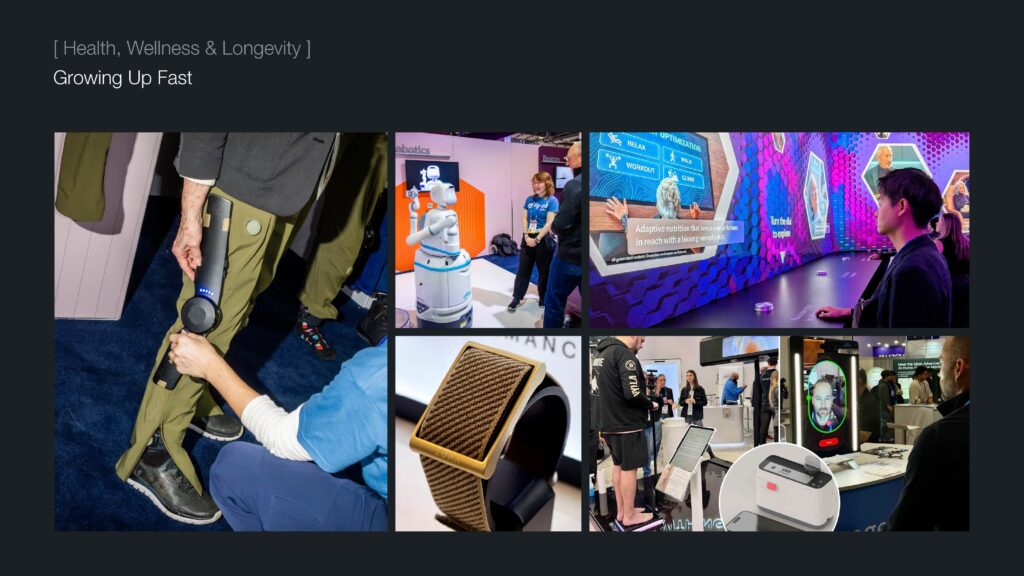
Health, Wellness & Longevity: Growing Up Fast
This category continues to expand, but it’s at an interesting inflection point.
Across the halls you saw:
- Wearables inspired by WHOOP and Oura (many knockoffs)
- Body scanning and biometric measurement tools (improving, but still raising accuracy questions)
- Longevity framed more as lifestyle optimization than true medical rigor
AARP’s presence really stood out.
Their booth wasn’t just big, it was thoughtful. AARP brought together startups, health innovators, and storytelling that treated aging and wellness with nuance, empathy, and real-world context. It felt less like tech-for-tech’s-sake and more like a platform built around people.
Another thread was the rise of physical assistance tech. Exoskeletal devices were positioned less as sci-fi augmentation and more as practical tools for longevity and labor. These systems are designed to reduce strain, support lifting, and extend mobility. Hyundai’s upper-body exoskeleton stood out as a signal of where this category is headed: assistive, ergonomic, and intentionally unobtrusive. The goal isn’t superhuman strength, it’s sustaining the body longer, safer, and with dignity.
Signals:
- Storytelling is as critical as data and sensors
- Health tech is maturing beyond novelty
- Trust, clarity, and empathy will define winners
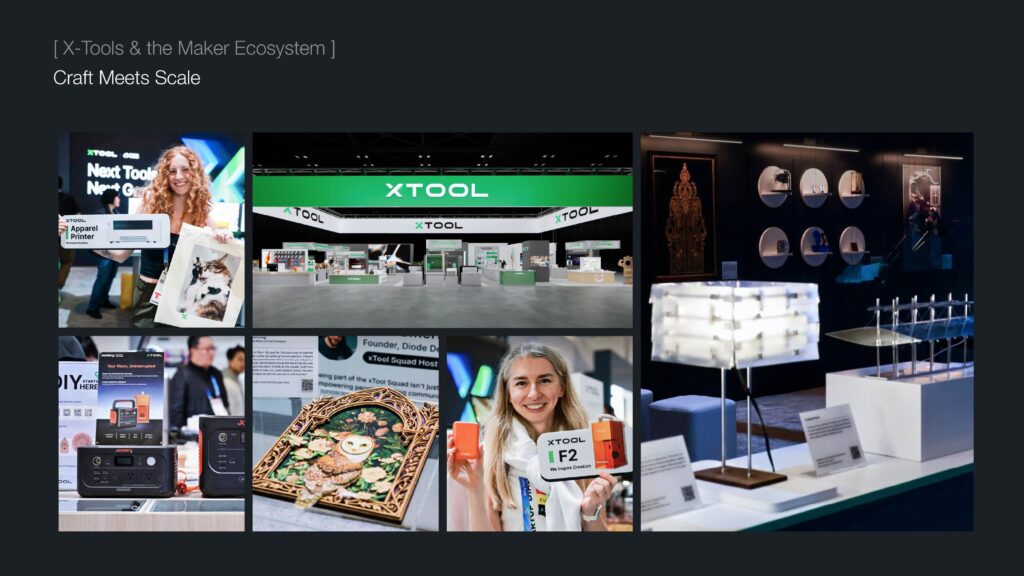
X-Tools & the Maker Ecosystem: Craft Meets Scale
In a completely different lane, but equally compelling, were the DIY and maker platforms, especially X-Tools.
Their presence spanned:
- 3D printing
- Laser cutting
- Advanced fabrication
- Printing on fabrics and new materials
- Large-scale art installations
What made it impressive wasn’t any single tool — it was the ecosystem. The idea that one brand could be a one-stop shop for modern making is powerful. It blends craft, accessibility, and serious capability in a way that feels very current.
Like LEGO, it tapped into creativity, just from a different angle.
Signals:
- Accessibility + capability is a winning combo
- Ecosystems beat standalone products
- Craft and making are re-surging with better tools
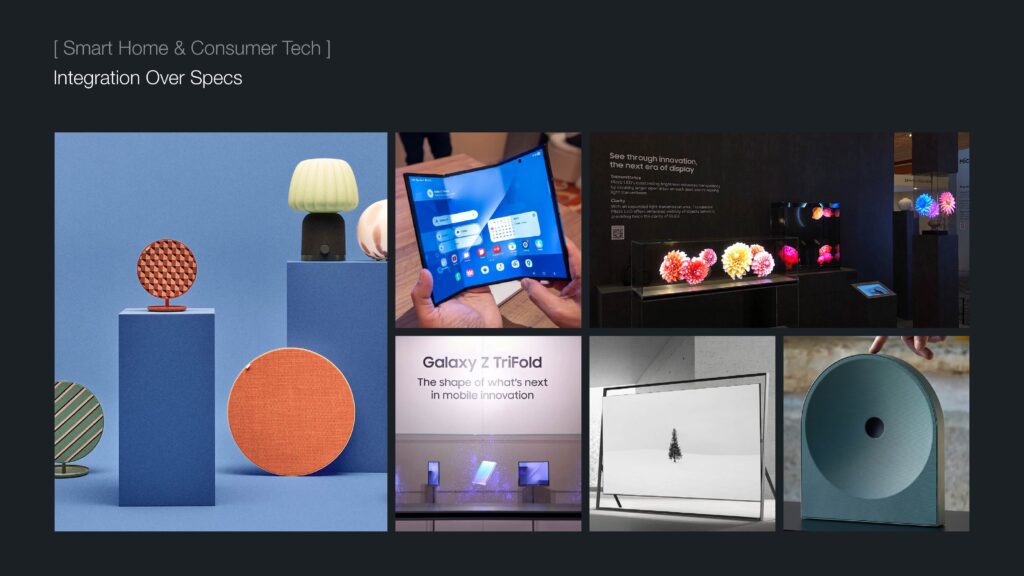
Smart Home & Consumer Tech: Integration Over Specs
This category felt mature.
- IKEA’s smart home ecosystem was thoughtful and human-scaled
- Multi-screen laptops and foldable displays are clearly settling in
- Samsung’s off-site booth leaned into concepts:
- Stand TVs
- Audio innovation
- Continued refinement of foldable phones
The shift is obvious: hardware is catching up to the ideas. Now it’s about design and ecosystems, not just specs.
Signals:
- Concept work is becoming more relevant than launches
- Integration matters more than raw performance
- Ecosystem thinking is table stakes
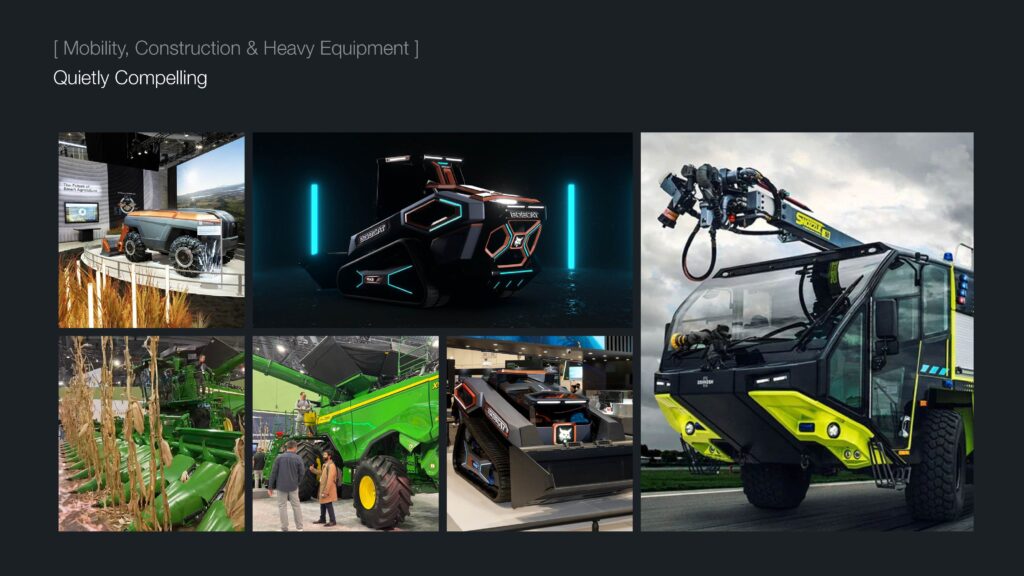
Mobility, Construction & Heavy Equipment: Quietly Compelling
The West Hall was one of the more interesting areas of the show.
Bobcat, Kubota, John Deere, and Oshkosh were all showing:
- Electric and hybrid concepts
- Transforming vehicles
- Future-facing industrial platforms
Oshkosh’s fire truck and Kubota’s transforming tractor were especially impressive.
These brands are doing genuinely interesting work, but often under-invest in visualization, storytelling, and experience.
There’s a lot of unrealized potential here.
Signals:
- Functional futures need emotional clarity
- Industrial design is quietly leading innovation
- Visualization and storytelling are major white spaces
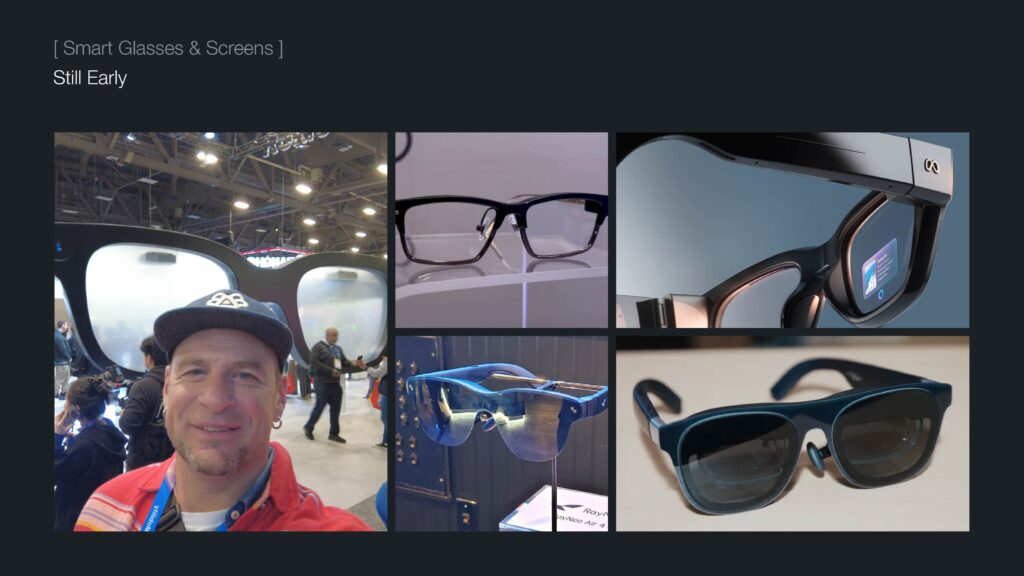
Smart Glasses & Screens: Still Early
Smart glasses were everywhere again, still searching for their “iPhone moment.” Screens continue to bend, fold, multiply, and reconfigure.
We’re clearly not there yet. The form-factor is better but still wide open.
Signals:
- Patience and restraint will win here
- The category is still pre-breakthrough
- Use cases matter more than tech demos
Me-Too Products Everywhere
Some categories felt completely saturated.
- Dreame showed up big — in multiple halls — but much of the lineup felt derivative
- Endless autonomous pool cleaners, lawn tools, snow blowers, and household machines repeated the same story over and over
Manufacturing access is high. Original thinking is not.
Signals:
- Barriers to entry are low
- Differentiation must come from design and narrative
- “Good enough” hardware is not “Good Design”
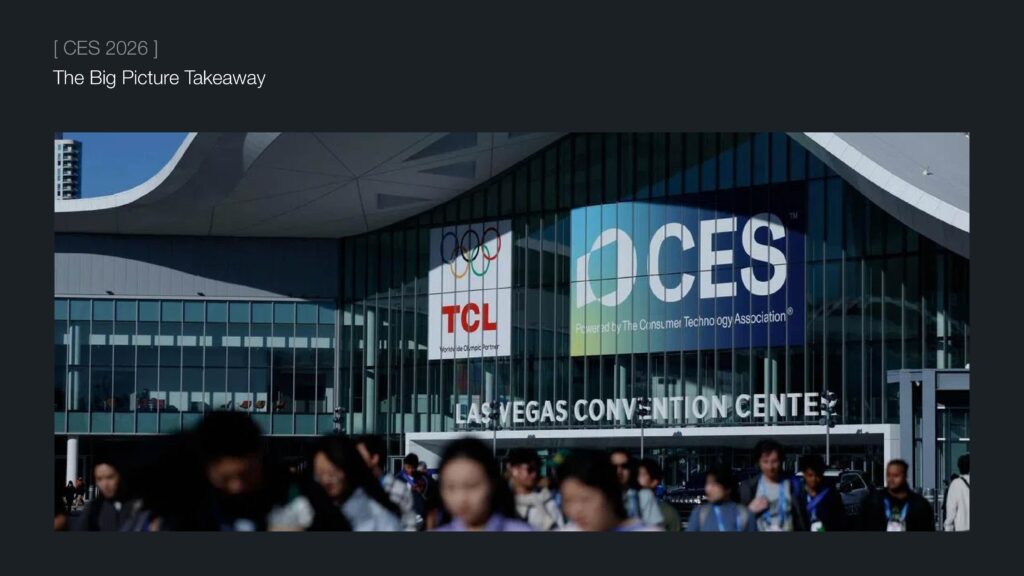
The Big Picture Takeaway
CES felt fragmented:
- Fewer big “wow” moments
- More cautious experimentation
- A noticeable undercurrent of restraint
But the through-lines were consistent:
- AI is assumed, not explained
- Hardware is commoditizing
- Design, narrative, and systems thinking are the real differentiators
What I walked away believing is simple:
The opportunity isn’t to chase trends.
It’s to help companies make sense of them — to shape technology responsibly and turn it into something people actually trust and want to live with.
That’s where Sprout does its best work.
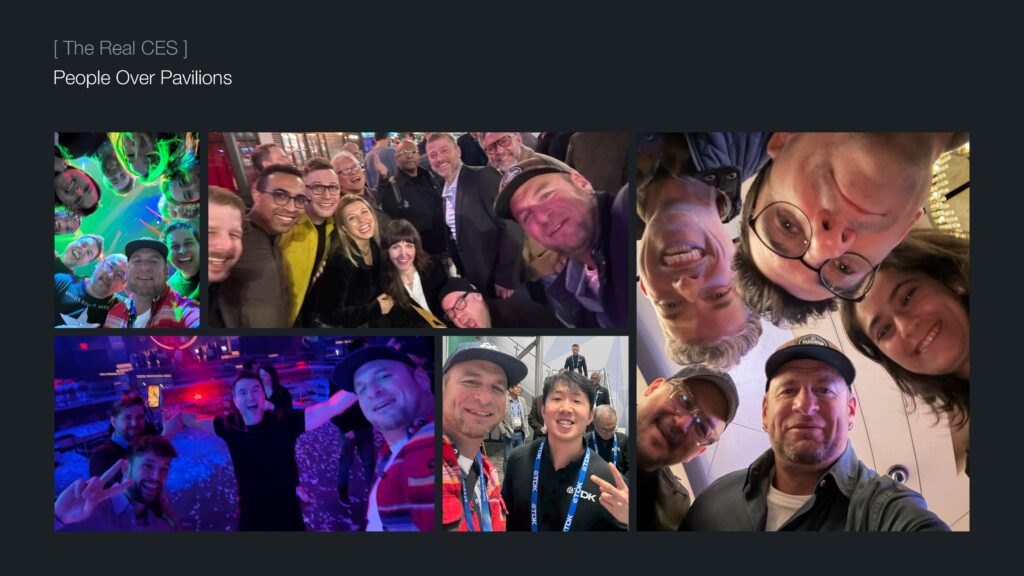
The Real CES: People Over Pavilions
CES was less about the show floor this year and more about the people.
The real value wasn’t walking every hall, it was the density of conversations. Shared dinners. Late nights. Accidental run-ins. Off-schedule moments where people relax and real opportunities surface.
Some of the most valuable insights didn’t come from booths at all — they came from comparing notes with other design leaders, founders, and operators navigating the same mix of ups and downs, reinvention, and cautious optimism. Those conversations were energizing. Inspiring. And more honest about what’s working, what’s stalled, and where the next real bets might be.
What stood out most was the alignment across disciplines. Industrial designers, brand leaders, engineers, and founders are all wrestling with the same questions:
- How do we integrate AI without losing craft?
- How do we design systems, not just products?
- How do we build things that actually earn trust?
CES creates a rare moment where those conversations happen back-to-back, at speed, across industries. That’s the hidden value of the show. Not the spectacle, the cross-pollination.
Walking away, I felt less energized by any single product and more encouraged by the people building them. The relationships strengthened. The ideas sharpened. And the reminder landed again: Progress doesn’t happen in isolation. It happens IRL, while walking, around tables, over meals, and in shared curiosity.
That, more than anything, is why CES still matters.