There are plenty of reasons companies invest in new products, but one sits above the rest: building and sustaining competitive advantage. Whether you’re a startup bringing something new to market or an established brand defending share, product development is how you create differentiation, meet evolving customer needs, and stay relevant in crowded categories.
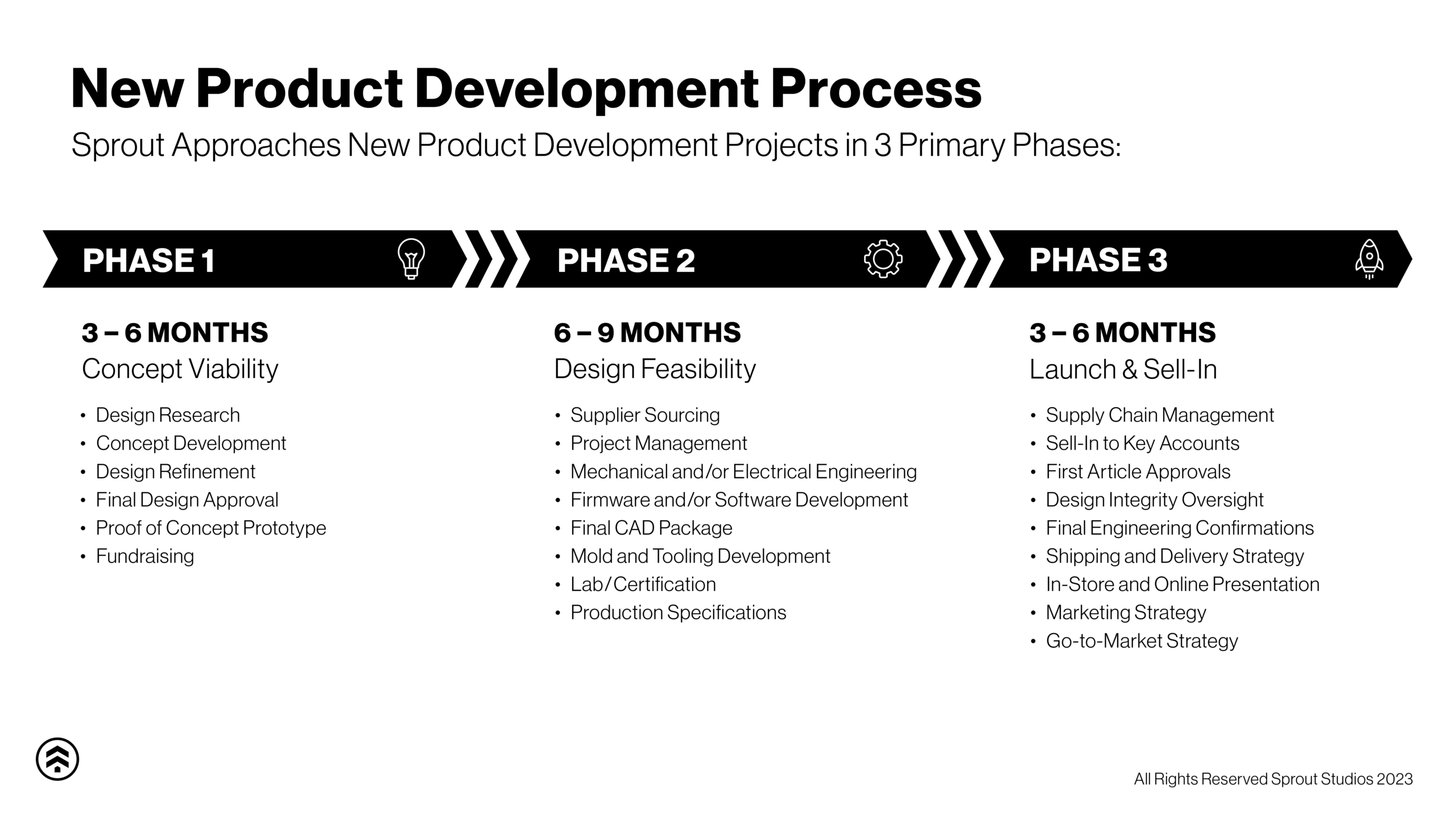
Before diving into the stages of new product development (NPD), it’s important to address a common misconception: there is no shortcut to success. The typical timeline for NPD projects averages 12–18 months, depending on complexity, scope, and technical requirements. Capital investment also varies, but a budget of $1–1.5 million is commonly recommended to design, develop, and launch a new product successfully.
Over the past 20 years, Sprout Studios has collaborated with clients ranging from Fortune 500 companies to startups to develop a wide variety of products. This experience has allowed us to internalize best practices and deliver repeatable success across the NPD lifecycle, from initial concept generation to full-scale production.
Below, we outline the three core phases of the new product development process, including detailed sub-phases and the checks and balances essential for ensuring product success. Skipping any step can create downstream challenges, so process continuity is critical.
As a product design consultancy, Sprout’s core competency lies in Phase 1: Concept Viability, but we provide guidance and oversight throughout the entire process in collaboration with engineering, manufacturing, and supply chain partners.
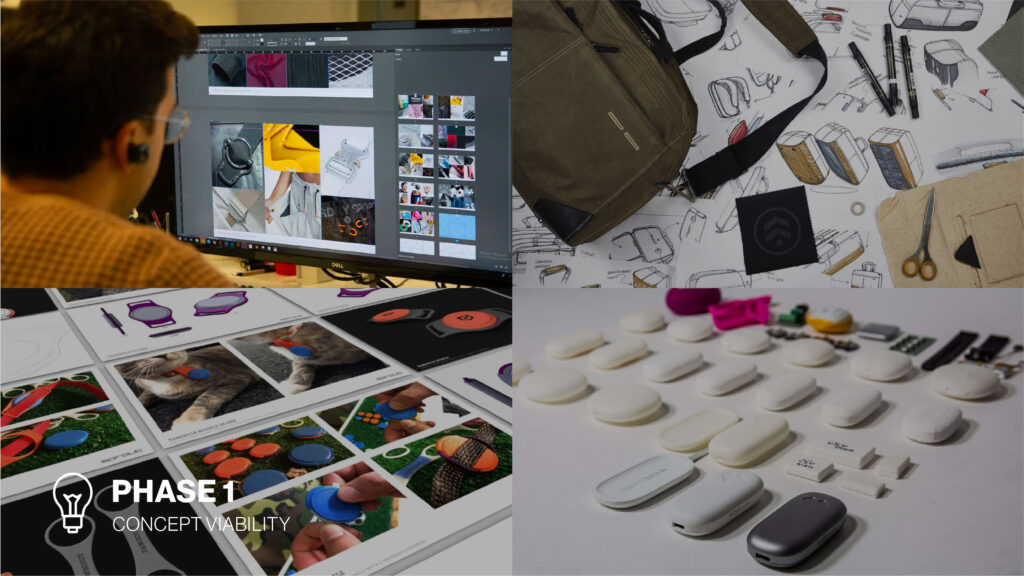
Product Development Phase 1: Concept Viability
Timeline: Approximately 3-6 months
Phase 1 focuses on transforming an idea into a tangible concept with validated market potential. This phase ensures the design is feasible, appealing to target users, and aligned with client objectives.
- P1.1 Design Research: Conduct comprehensive research to understand the market landscape, identify opportunities, define target users, and evaluate business and technical requirements. Insights gained here guide ideation, concept prioritization, and risk mitigation strategies.
- P1.2 Concept Development: Engage in brainstorming and ideation sessions to generate a wide range of potential solutions from mild to wild, with extensive collaboration to pinpoint the most impactful and user-centered solution(s) to pursue.
- P1.3 Design Refinement: Fine tune the approved concept and elicit responses from target consumers/users to direct the design to its more final form.
- P1.4 Final Design Approval: Assemble the technical documentation and design assets necessary for engineering and manufacturing partners to execute the project. This step validates that the approved concept is fully defined and ready for downstream development.
- P1.5 Proof of Concept Prototype: Produce a physical sample of the approved design to demonstrate functionality, validate form, and communicate intent to stakeholders, including marketing and sales teams. This prototype informs any final adjustments before entering the feasibility phase.
- P1.6 Fundraising: Develop the necessary communication assets, budget projections, and tentative production schedules to continue building capital resources that advance the new product development process.
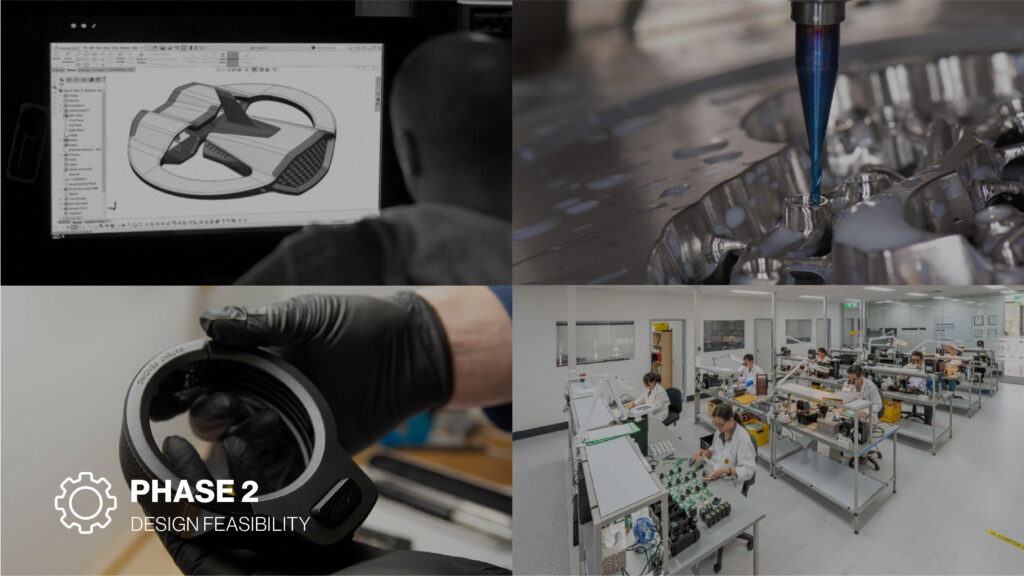
Product Development Phase 2: Design Feasibility
Timeline: Approximately 6-9 months
Phase 2 focuses on engineering, manufacturing, and technical validation, ensuring the product can be produced efficiently and meet specifications. Sprout remains actively involved throughout this phase in a consulting capacity to maintain the integrity of the approved design as needs or team requests dictate.
- P2.1 Supplier Sourcing: Engage suppliers to obtain cost estimates, qualify vendors, and establish partnerships for all components and production processes.
- P2.2 Project Management: Confirm the application of methods, skills, knowledge, and experience to achieve specific project objectives according to agreed parameters and criteria.
- P2.3 Mechanical and/or Electrical Engineering: Work with professional engineers to resolve technical challenges, optimize designs for manufacturability, and ensure all mechanical and electronic systems meet specifications.
- P2.4 Firmware and/or Software Development: Develop necessary software or firmware to support product functionality, connectivity, or digital interaction, ensuring seamless integration with the physical design.
- P2.5 Final CAD Package: Create comprehensive 3D files that capture every detail of the product, including interior components, tolerances, and material specifications, to guide tooling, manufacturing, and quality assurance.
- P2.6 Mold and Tooling Development: Collaborate with molding and fabrication partners to design the production tools needed to create product components, maintaining design fidelity and quality.
- P2.7 Lab Testing & Certification: Perform required tests and obtain certifications for performance, durability, safety, and environmental compliance, depending on product type and intended markets.
- P2.8 Production Specifications: Document all standards, measurements, and tolerances to ensure manufactured units consistently meet quality requirements during short-term production and long-term lifecycle.
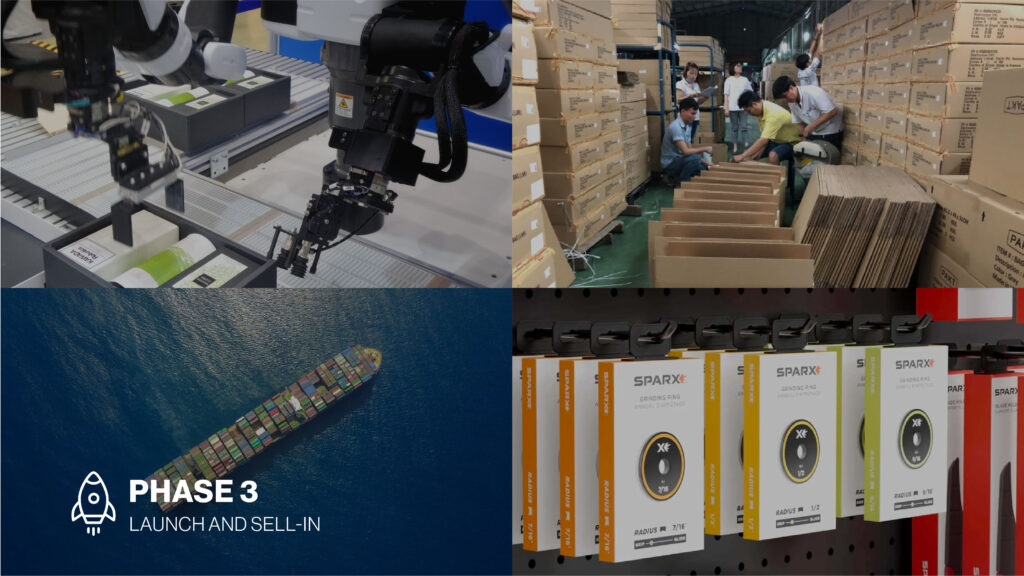
Product Development Phase 3: Launch & Sell-In
Timeline: Approximately 3-6 months
Phase 3 centers on bringing the product to market and supporting initial distribution. Partners and vendors lead execution, with Sprout providing oversight where needed.
- P3.1 Supply Chain Management: Establish and monitor all supply chain operations, ensuring timely delivery, inventory accuracy, and coordination among partners.
- P3.2 Sell-In to Key Accounts: Work with sales teams to acquire key accounts, schedule buyer meetings, and support early-stage distribution efforts.
- P3.3 First Article Approvals: Evaluate initial production samples to verify conformance with design specifications and quality standards.
- P3.4 Design Integrity Oversight: Monitor pre-production units to ensure no deviations from the approved concept, protecting the original design intent.
- P3.5 Final Engineering Confirmations: Document and approve minor refinements or adjustments that do not impact core product functionality or specifications.
- P3.6 Shipping and Delivery Strategy: Plan logistics, importation, and distribution from manufacturing facilities to regional centers, optimizing containerization, palletization, and transportation methods.
- P3.7 In-Store & Online Presentation: Develop branding, merchandising, and digital assets to present the product effectively to consumers both in-store and online.
- P3.8 Marketing Strategy: Prepare long-term promotional plans, public relations campaigns, digital marketing initiatives, and retailer engagement strategies, ensuring alignment with overall product positioning.
- P3.9 Go-to-Market Strategy: Define target customer outreach, competitive differentiation, and sales/support team education. Establish KPIs to measure launch effectiveness and inform future product iterations.
Key Takeaways on New Product Development
- Hardware is HARD: There are no shortcuts. Success comes from a structured, iterative approach.
- Phase 1 is critical: Concept validation and design refinement reduce risk downstream.
- Integrated teamwork matters: Collaboration with engineering, manufacturing, and marketing ensures continuity and quality.
- Time and budget planning: Expect 12–18+ months and $1–1.5 million for typical hardware projects.
- Sprout supports the full journey: While our expertise is in Phase 1, we guide clients through every phase, partnering with suppliers and manufacturers to bring products to market efficiently.
If you have an idea you’d like to develop, contact Sprout for a project quote and see how our multidisciplinary team can help bring your product to life.