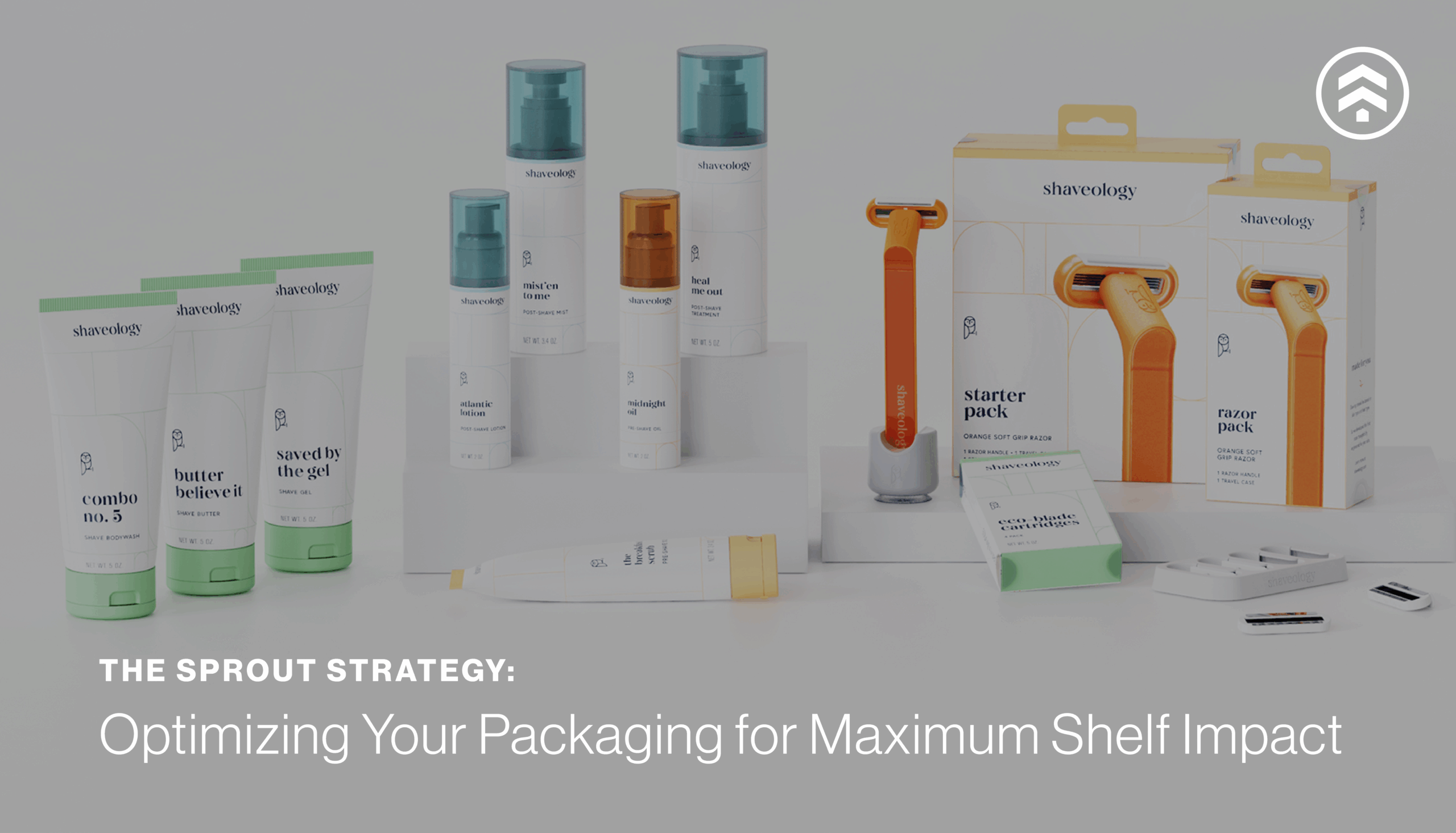
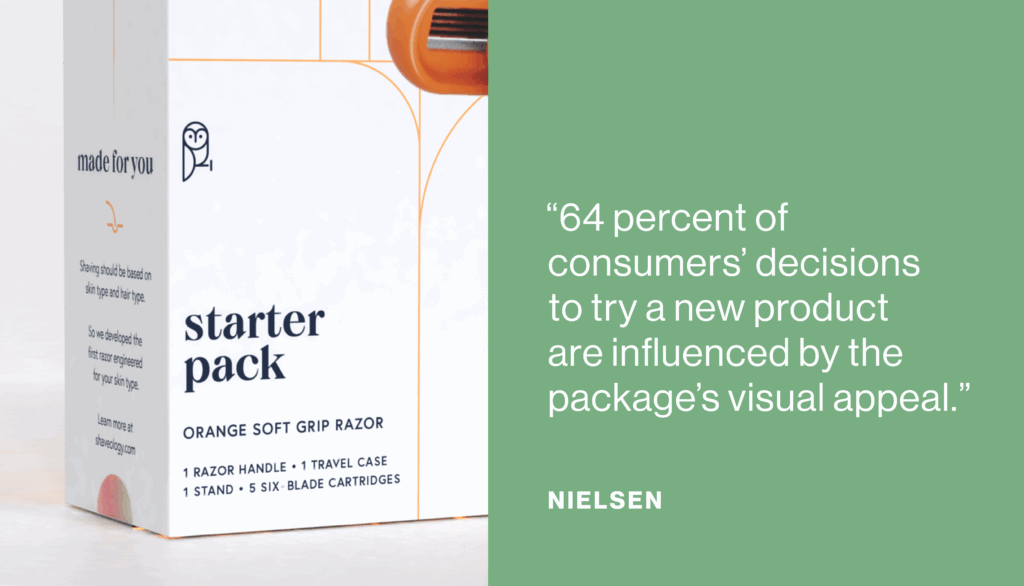
In the wildly competitive landscape of consumer packaged goods (CPG), exceptional packaging design is often the difference between a product that flies off the shelf and one that gets overlooked. A Nielsen study revealed a telling statistic: 64 percent of consumer decisions to sample a new product are influenced by the visual appeal of the package. This underscores the role that packaging plays in driving purchase decisions.
In this blog, we explore strategies for designing CPG packaging that maximizes shelf impact.
The Foundation of Effective Packaging
Successful packaging starts with a deep understanding of your brand identity and market positioning. We guide our clients through a comprehensive discovery process, evaluating the brand’s equities, target audience, and retail context. This step is especially critical for emerging brands aiming to differentiate themselves on crowded shelves.
It is essential to begin the packaging design process with:
- Understanding your competitive landscape: Identify gaps and opportunities to communicate what makes your brand unique.
- Defining brand equities: Ensure design decisions reinforce your brand’s visual language, values, and messaging.
- Considering cost-of-goods (COG): Packaging design must balance creativity with practical budget constraints. Clear COG understanding allows designers to push innovation without compromising feasibility or profitability.
Understanding these constraints upfront, will foster focused creativity that produces impactful packaging while staying within practical limits.
Designing for Maximum Shelf Impact
Maximizing shelf impact requires a deep understanding of retail placement and consumer behavior. Start by defining your ideal consumer and their shopping habits. Then, map potential retail touchpoints, from primary product aisles to promotional endcaps.
Key considerations for shelf impact include:
- Retail positioning: Understand the various placements your product may occupy and tailor your packaging design for each location to maximize visibility. A beverage, for example, may be displayed in multiple locations—single-serve refrigerated cases, multi-pack shelves, or promotional endcaps. Each setting requires packaging optimized for visibility.
- Near-neighbor competition: Evaluate adjacent products and ensure your packaging stands out. Bold color, clear typography, and distinct shape can differentiate your product in crowded spaces.
- Shelf-level visibility: Consider line-of-sight for consumers. Eye-level placement receives the most attention, so design elements must be optimized for different shelf heights.
At Sprout, we combine creativity with data-driven strategies to optimize shelf performance:
- 3D renderings and virtual shelf mockups allow brands to visualize packaging in real-world retail scenarios before production.
- Consumer testing and eye-tracking studies evaluate visual hierarchy, messaging, and color impact, identifying which designs capture attention most effectively.
- Behavioral psychology principles—from color theory to shape perception—guide consumer focus and influence purchase behavior.
By integrating these tools and insights, Sprout designs packaging that is not only visually compelling but also strategically engineered to attract the right audience and maximize retail success.
Fostering Repeat Customers
In the CPG space, one-time buyers aren’t the goal. Sustained success comes from nurturing repeat purchases and building brand loyalty. Packaging plays a crucial role in this process by shaping the customer experience at every touchpoint.
- Quality and durability: Robust, high-quality materials that protect the product during shipping and everyday use build consumer trust and reinforce a premium perception. Packaging that survives handling without compromising aesthetics signals reliability and care.
- Functional design: Thoughtful usability features—such as resealable closures, ergonomic handles, or intuitive instructions—enhance the consumer experience. Packaging that is easy to open, store, and use increases satisfaction and encourages repeat interactions.
- Emotional engagement: Every detail communicates brand identity. Colors, textures, typography, and messaging should evoke the desired emotions while reinforcing your brand’s values. Packaging that resonates on an emotional level strengthens connections with consumers and fosters brand affinity.
- Ongoing engagement: Packaging can extend the brand experience beyond the point of purchase. QR codes, social media prompts, and website links provide access to loyalty programs, tutorials, and special promotions, keeping consumers engaged and encouraging advocacy.
Thoughtful packaging transforms a simple product interaction into a meaningful brand experience. By combining durability, usability, emotional resonance, and opportunities for ongoing engagement, brands can turn first-time buyers into loyal advocates who return again and again.
Packaging That Delivers Results
Creating packaging that drives shelf impact requires a combination of creativity, strategy, and data-driven insights.
At Sprout Studios, our vertically integrated packaging design services help brands develop strategic, high-performing packaging solutions. From concept to production, we craft designs that stand out on shelves, delight consumers, and drive top-of-category performance.
If you’re ready to elevate your CPG packaging, connect with our multidisciplinary team for a quote.