It might be clarity. It might be conversion. It might be cost, scalability, or competitive pressure. But when brands redesign packaging, it is rarely a visual decision. It is a performance decision.
Packaging has to do more than look good. It has to communicate clearly, support conversion, differentiate in-market, and operate effectively across production and fulfillment. When it stops doing those things, redesign shifts from creative direction to business function.
We work across both ends of this spectrum at Sprout Studios. We develop packaging systems from the ground up, and we redesign existing systems that are no longer performing. That may mean clarifying the offer, improving shoppability, or building a system that can scale with the brand.
Packaging Redesign Starts With Performance, Not Preference
Most packaging issues do not begin with how something looks. They begin with how it performs.
The first question is clarity. If shoppers cannot immediately understand what a product is, how it works, or why it matters, the system is already under strain.
Brands typically see this through inconsistent shelf performance, frequent customer confusion around variants, or repeated questions in reviews and customer service.
Clarity is also heavily influenced by merchandising context. A design that works in isolation may break down when placed next to competitors, within a crowded shelf set, or inside a digital grid of thumbnails.
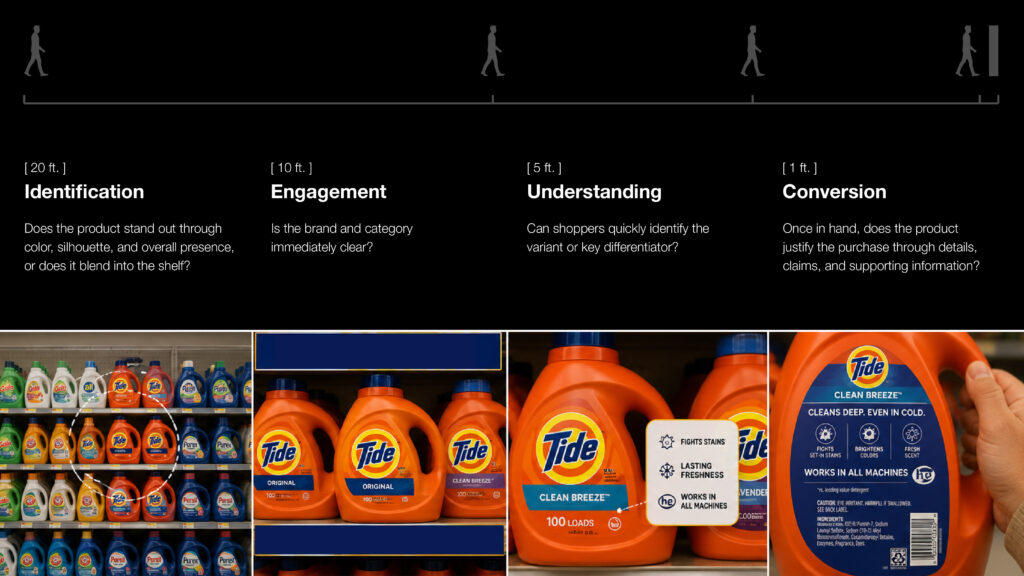
A useful way to evaluate this is through the 20-10-5-1 Rule, which tests how packaging performs at different distances:
- 20 feet – Identification: Does the product stand out through color, silhouette, and overall presence, or does it blend into the shelf?
- 10 feet – Engagement: Is the brand and category immediately clear?
- 5 feet – Understanding: Can shoppers quickly identify the variant or key differentiator?
- 1 foot – Conversion: Once in hand, does the product justify the purchase through details, claims, and supporting information?
The next question is conversion. Packaging plays a critical role in turning attention into action. When traffic is present but sales lag, or when PDP engagement does not translate into cart activity, the issue is often hesitation.
Conversion is not driven by a single element. It is the result of several factors working together:
- Clear value proposition: What the product does and why it matters must register immediately
- Hierarchy and prioritization: The most important information must surface first, without competing messages
- Trust signals: Claims, certifications, ingredients, and quality cues need to reinforce credibility
- Price justification: The packaging must visually and verbally support the product’s perceived value
- Consistency across touchpoints: What shoppers see online must align with what they receive
When these elements are not aligned, the gap between interest and action widens.
Differentiation is another pressure point, and it is closely tied to visibility. Categories evolve over time. Competitors improve. Private labels raise the baseline. What once felt distinct can start to blend into a more competitive visual field.
This is not just about aesthetics. It is about how effectively a product stands out within its merchandising environment. On shelf, that means breaking through clutter and establishing a recognizable presence. In ecommerce, it means holding clarity and identity at thumbnail scale. When packaging loses visibility—whether through color, structure, or hierarchy—it becomes harder to find, harder to recognize, and easier to ignore.
Operational friction is equally important. Rising production costs, structural inefficiencies, and overly complex print systems can make packaging difficult to scale or maintain.
This often becomes more visible over time, especially for products already in the market. Small updates—whether driven by supplier changes, material shifts, or regulatory requirements—can trigger repeated rounds of rework. Compliance updates, outdated claims, or missing information add another layer of complexity, forcing changes that must be implemented across existing SKUs.
When these pressures compound, packaging becomes harder to manage, more expensive to produce, and less consistent across the portfolio. In these cases, redesign is not just a design decision. It is a system-level correction.
From Market Triggers To Performance Gaps
A redesign isn’t a creative whim. It is a corrective action.
To make that actionable, we evaluate common business triggers through a structured lens. Each one typically signals a specific performance gap where packaging is no longer doing its job.
Brand Evolution → The Clarity Gap
When a brand moves upmarket or refines its positioning, packaging often becomes a lagging indicator. If the strategy signals “premium” but the packaging communicates “value,” the system is misaligned.
The Data Signal: High awareness but lower perceived quality, relevance, or differentiation in consumer feedback.
The Performance Fix: Redesigning hierarchy, typography, and visual language to accurately reflect the brand’s current positioning and value.
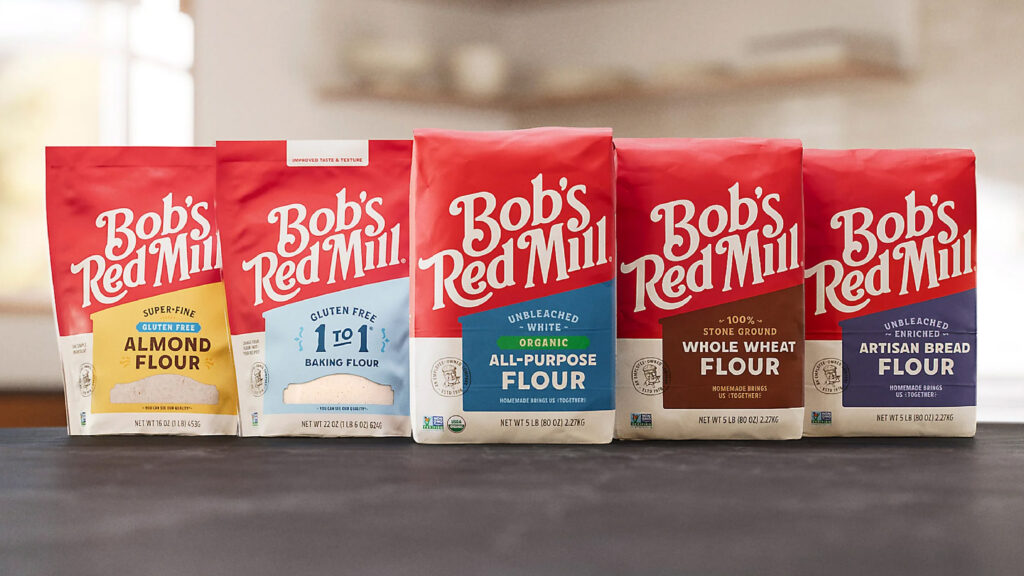
Bob’s Red Mill recently introduced redesigned packaging with a bolder logo, a larger brand color footprint, stronger product callouts, and a more organized system that improves shelf scanability and SKU differentiation across the portfolio, while still maintaining the brand equity and heritage consumers already trust. It’s a good example of how the best packaging redesigns aren’t about making things look different, they’re about making them work better. By improving navigation and product understanding without abandoning decades of brand equity, the redesign demonstrates how thoughtful evolution can strengthen both performance and perception.
Competitive Shifts → The Visibility Gap
Even if your packaging does not change, the shelf does. New entrants and improved private label reset category expectations, often reducing your product’s ability to stand out at a distance.
The Data Signal: Declining share of attention, reduced shelf standout, or failure to register at distance.
The Performance Fix: Adjusting color, contrast, structure, and blocking to re-establish visibility and improve recognition within the category set.
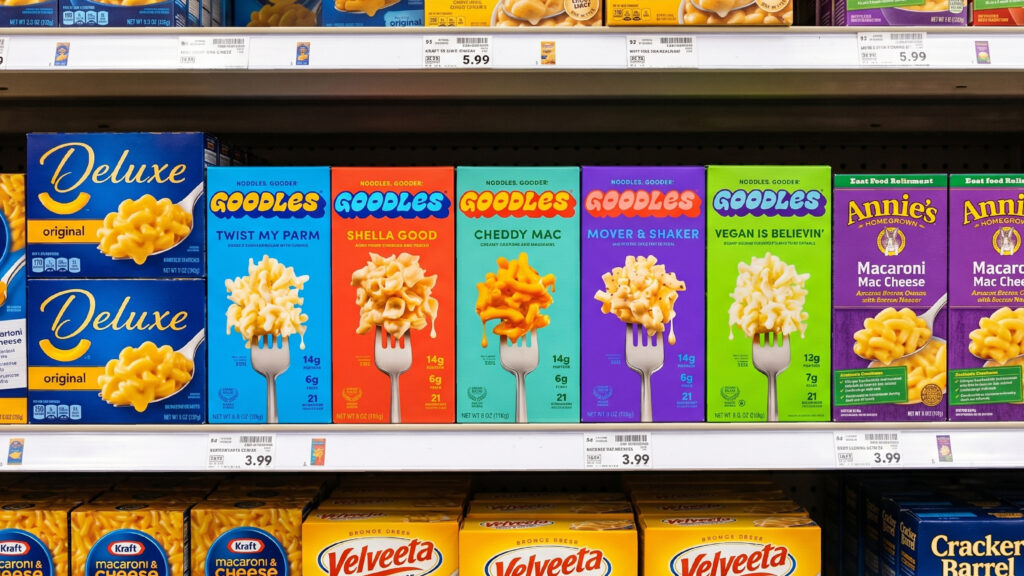
Goodles is a good example of elevated visual quality and shelf presence raising the baseline for an entire category and forcing national brands to respond.
Portfolio Complexity → The Navigation Gap
As SKUs expand, systems that were once intuitive become harder to navigate. Naming conventions drift, hierarchies blur, and the portfolio begins to feel assembled rather than designed.
The Data Signal: Customer confusion, incorrect variant selection, increased returns, or negative reviews tied to misunderstanding.
The Performance Fix: Creating a more disciplined design system with clear hierarchy, consistent architecture, and intuitive differentiation across the product line.
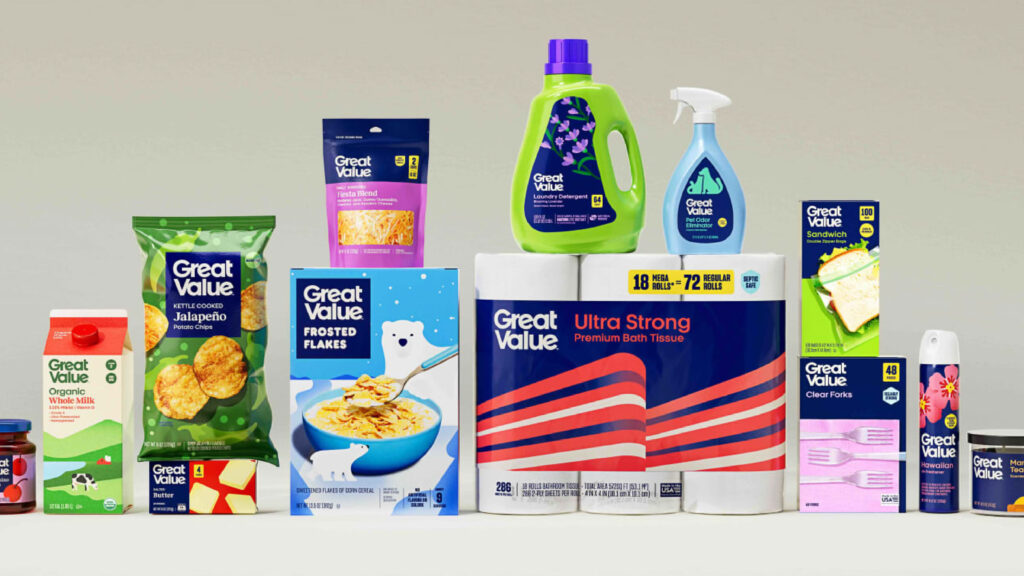
Private label brands like Walmart’s Great Value span dozens of categories, from pantry staples to household goods. The role of packaging is not just to differentiate between variants, but to create a consistent navigation system across entirely different product types while still carrying the retailer’s brand equity.
Without a clear system, that scale creates friction. With one, packaging becomes a tool that helps shoppers move quickly, confidently, and correctly across the entire portfolio.

Channel Strategy → The Context Gap
Packaging designed for retail does not automatically translate to digital environments. What works on the shelf can lose clarity and impact at thumbnail scale.
The Data Signal: Strong in-store performance but low click-through rates or weak engagement in e-commerce.
The Performance Fix: Optimizing mobile-ready hero images and adapting secondary packaging elements to improve clarity and impact in digital environments.
In our work for Carpe, we adapted key packaging elements for digital-first environments, creating mobile-optimized imagery that improved product clarity and shelf presence at thumbnail scale.

Operational Shifts → The Efficiency Gap
Changes in materials, suppliers, production methods, or regulatory requirements introduce new constraints that existing packaging systems are not built to handle.
The Data Signal: Rising cost of goods, production inefficiencies, delays, or repeated compliance-driven rework.
The Performance Fix: A systemic redesign that simplifies structures, aligns with updated manufacturing and regulatory realities, and restores efficiency without compromising brand integrity.
Brands like Google have reworked packaging systems across products like Pixel and Nest to eliminate plastic entirely, requiring structural and material changes that impact both production and perception.
Do You Need A Full Redesign Or A Targeted Refresh?
Not every performance issue requires starting over.
A refresh is often sufficient when the core system is still strong, recognition is intact, and the need is primarily modernization, simplification, or clarity. In these cases, the foundation works, but the expression needs refinement.
A full redesign becomes necessary when positioning has changed significantly, when the portfolio lacks cohesion, or when packaging is no longer differentiating effectively. It is also required when operational, compliance, and conversion issues begin to compound.
The distinction matters. Effective packaging strategy is not about redesigning more often. It is about redesigning with intent.
When Do You Know It Is Time?
The decision to redesign should be based on evidence, not instinct. That evidence typically appears across clarity, conversion, differentiation, cost, and compliance.
It should also be evaluated across teams. Marketing, sales, ecommerce, operations, regulatory, and customer service each experience packaging differently, revealing different system gaps.
Channel context is equally important. Shelf performance, ecommerce behavior, retail expectations, shipping experience, and merchandising environments all shape how packaging performs.
Finally, no SKU should be evaluated in isolation. Individual issues often point to broader portfolio or system problems.
The Best Packaging Redesigns Drive Better Performance
The strongest packaging systems do more than refresh appearance. They improve how products are understood, purchased, produced, and scaled. They clarify communication, strengthen differentiation, improve conversion, and reduce operational friction by creating systems that are easier to manage and extend.
This is where Sprout’s perspective becomes critical. The most effective packaging work sits at the intersection of brand strategy, shopper behavior, and real-world execution. A redesign should not only improve how something looks; it should improve how the business works.
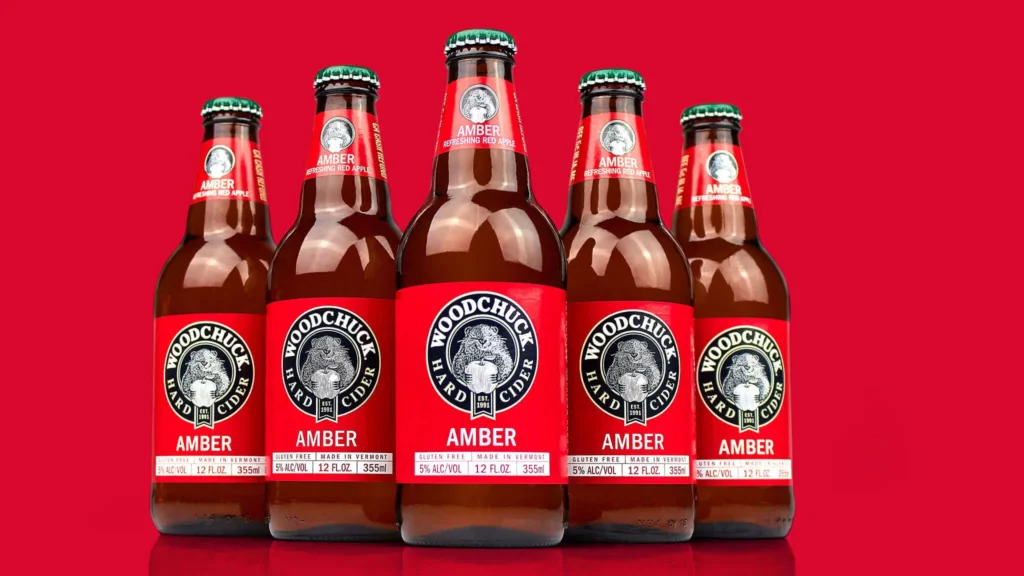
Not every redesign succeeds. Some updates improve aesthetics but weaken recognition or brand equity. Others modernize visuals but lose the cues that drive purchase. Tostitos’ recent updates show how even well-executed visuals can feel misaligned if they drift too far from established brand cues. While these changes were likely well-intentioned, tested and evaluated, every change comes with risk.
We evaluate packaging as a complete performance system rather than a surface-level asset. We look at common business “triggers” and view them as specific performance gaps that require a systemic recalibration, not an isolated design fix.
Because these issues are often interconnected, the goal is not to solve one problem in isolation. It is to recalibrate the entire system so packaging performs consistently across shelf, e-commerce, and production.
A strong redesign is not just an update. It is a correction that aligns packaging with how the brand needs to compete and operate today.
Is It Time To Redesign Your Packaging?
If your packaging is creating confusion, blending into the category, underperforming across channels, or becoming harder to manage operationally, it may be time to reassess the system.
We help brands evaluate packaging through the lens of performance, scalability, and shopper impact so redesign decisions are grounded in what the business actually needs next.
→ Reach out to our design team to discuss your packaging goals.