Packaging has a complex job for e-commerce brands. It has to perform in retail, where it competes on shelf, and in e-commerce, where it must communicate instantly through a screen, while also shipping efficiently and delivering a strong unboxing experience.
Packaging is a system that directly impacts cost, conversion, and brand perception, not just a surface-level design exercise.
The brands getting it right are not simply following trends. They are designing packaging to perform across the entire business, from shelf to screen to fulfillment.
E-commerce Packaging ≠ Traditional Packaging
The shelf is gone
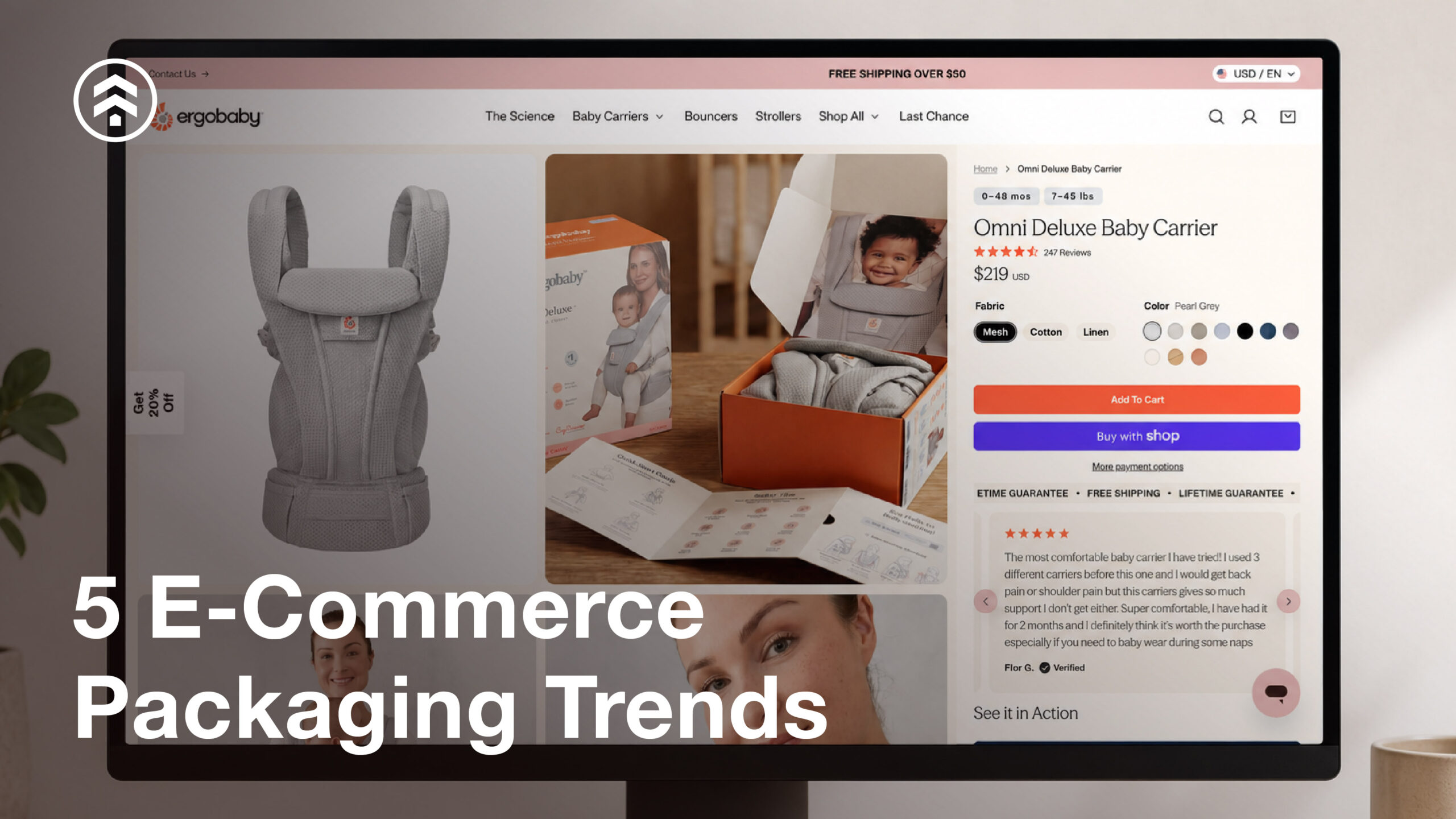
In e-commerce, products are first evaluated on a screen, not in a store. Product pages, thumbnails, and image carousels do the heavy lifting, communicating benefits, features, and value far more directly than packaging ever could on a shelf.
In many cases, the physical package is not the primary driver of the purchase decision. Brands prioritize clean, controlled visuals that highlight benefits, ingredients, and use cases, often simplifying how packaging appears in order to better communicate value in a digital environment. In categories like vitamins and supplements, packaging is frequently simplified or partially abstracted in digital content to emphasize clarity.
Even with that level of simplification, brands should still aim to accurately represent packaging within their digital content. Showing the real pack, not just idealized visuals, helps establish transparency and gives customers a more complete understanding of what they are buying. It also ensures the brand experience is carried consistently from screen to delivery, where the moment of truth ultimately happens when the product arrives at home.
This shift changes the role of packaging for e-commerce brands and introduces a more layered system. Packaging now operates across primary, secondary, and transit levels, each playing a distinct role in both the customer experience and the operational journey.
Primary packaging communicates the product and brand at the point of use. Secondary packaging supports protection, presentation, and the unboxing experience at delivery. Transit packaging ensures the product moves efficiently and safely through fulfillment, distribution centers, and last mile shipping.
Most brands treat these as separate moments. The strongest ones design them as a continuous experience.
Unboxing matters more
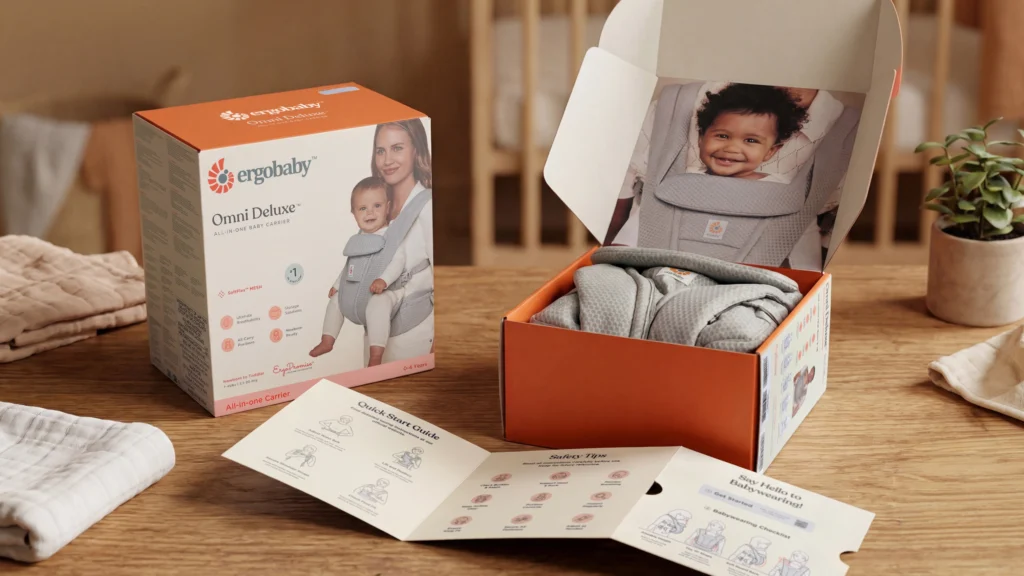
Without a shelf to compete on, the unboxing experience becomes a key opportunity to create emotion, reinforce quality, and tell a story. Packaging is no longer just protective. It is performative.
But this is also where many brands over-index in one direction. They either strip the experience down too far, or they treat unboxing purely as a place to add more content, more messaging, and more components.
The most effective systems are intentional about what lives where. Inserts, messaging, and cross sell opportunities all have value, but they work best when they are structured as part of a larger system rather than added as an afterthought. In many cases, unboxing also plays a functional role, supporting proper setup, assembly, or installation so the product is experienced as intended.
The brands that stand out are the ones that understand unboxing isn’t about excess. It’s about sequencing, clarity, and delivering a moment that feels considered.
Operations matter more too
At the same time, e-commerce packaging has to perform across a much more complex operational chain. Products move from manufacturing into distribution centers, through picking and packing workflows, and then into final transit to the customer. At each stage, packaging has to function differently.
Protection, dimensional efficiency, shipping cost, and speed to assemble all play a role, but so does how the system behaves inside fulfillment environments. A package might look strong in concept, but if it slows down picking, creates variability in pack-out, or fails during last mile transit, it introduces friction into the system.
This is where many packaging strategies break down. They are designed as static objects rather than dynamic systems that need to operate across manufacturing, distribution, and delivery. The strongest systems account for all three from the start, not after issues appear in production.
E-Commerce Packaging Trends in 2026

1. Packaging designed around the unboxing moment
More brands are treating the unboxing experience as an extension of the product itself. That means thinking beyond the exterior and designing intentional reveal sequences, interior messaging, and small branded details that create anticipation, clarity, and payoff once the package is opened.
Brands like Glossier have helped define this approach at scale. The experience is built into the system from the start, where simple outer packaging gives way to consistent interior elements like pink pouches, stickers, and inserts.
Each layer has a clear role. The exterior prioritizes efficiency and recognition, while the interior creates a moment of discovery that feels personal and elevated. That contrast increases perceived value without adding unnecessary complexity.
Consistency is what allows it to scale. Customers come to expect the same sequence, turning a functional delivery into a repeatable brand experience that is easy to recognize and share.
The goal is not more packaging. It is better sequencing.
2. Faster-to-assemble packaging systems
Fulfillment realities are influencing packaging decisions more than ever. As order volumes increase and labor efficiency becomes more important, brands are rethinking how packaging is built, not just how it looks.
This includes a shift toward faster-to-assemble structures such as self-locking cartons, optimized folding sequences, reduced component systems, and simplified adhesive applications where appropriate. The goal is to reduce steps in pack-out while maintaining structural integrity, consistency, and brand presentation.
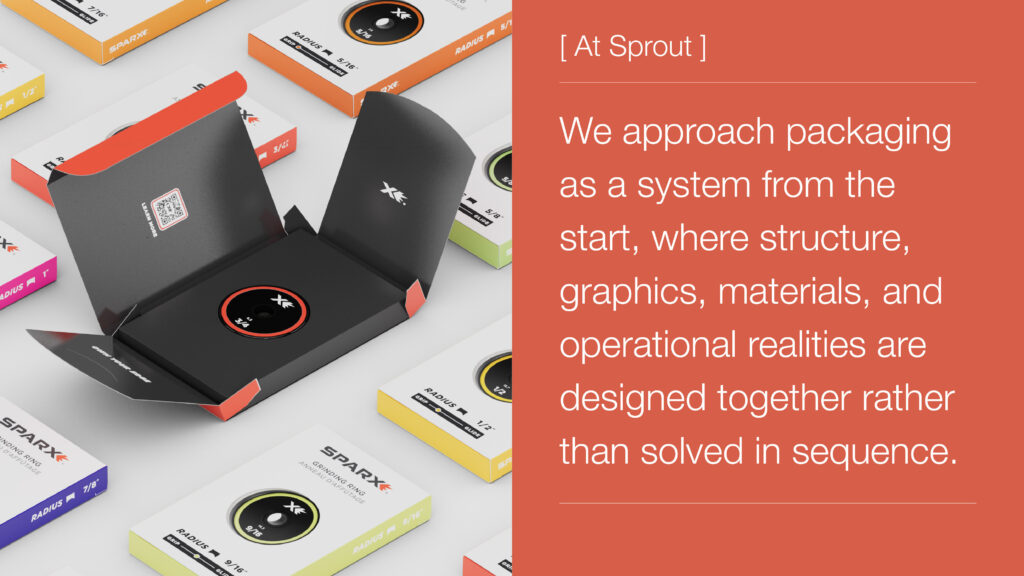
At Sprout, we designed a packaging system for Sparx Hockey that is intentionally efficient to assemble and consistent to execute, without compromising the clarity or identity of the brand experience.
This is one of the least visible trends to customers, but one of the most important to the business. Packaging that slows down fulfillment, introduces variability in assembly, or increases handling time does not scale effectively over time.
3. Simpler systems that still feel premium
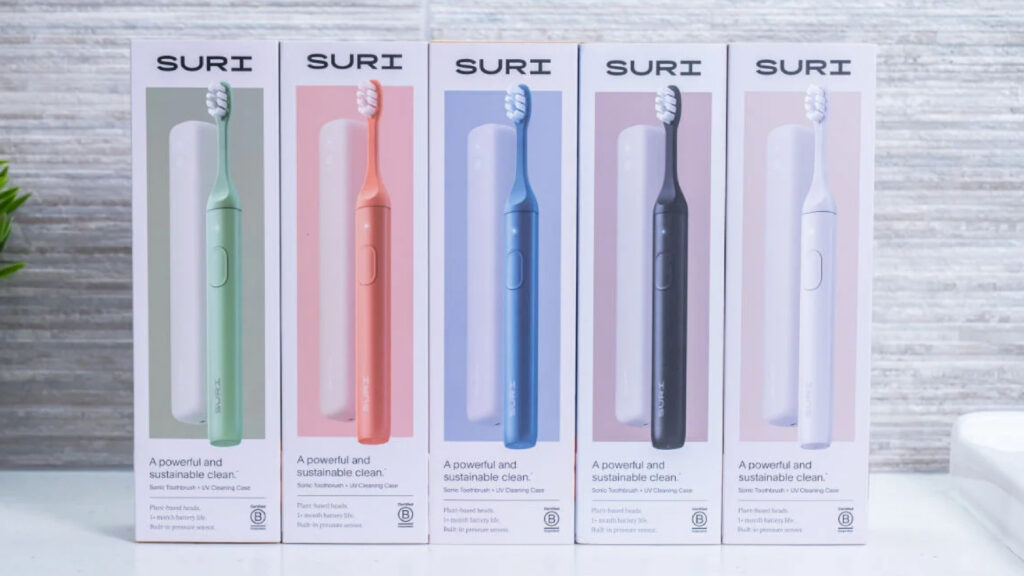
Instead of complex, overbuilt structures, brands are simplifying both the packaging design system and the physical pack itself, reducing components while still maintaining a premium feel.
This is where brands like Suri stand out. The system is disciplined, from structure to visual hierarchy to material selection, showing that simplicity, when executed well, can feel more elevated than something more complex.
There is also a sustainability layer to this shift. Simpler systems often use fewer materials, fewer finishes, and fewer production steps, which can reduce waste and improve efficiency across the supply chain. In many cases, simplicity is not just a design choice. It is an operational and environmental one.
A common misconception is that premium requires more layers, more finishes, and more cost. In reality, the strongest packaging systems are often the most disciplined, both in how they are designed and how they are specified.
4. A better balance between protection and shipping efficiency
As shoppers increasingly expect easy returns and shipping costs remain under pressure, brands are rethinking how packaging performs across the full fulfillment and return cycle, not just outbound delivery. Right-sized structures, reduced void space, and smarter protective strategies are becoming standard, but the conversation is also expanding beyond first delivery into reverse logistics.
This is not just an operational concern. It is a brand one. Damaged products erode trust quickly. Inefficient packaging can increase return friction, from repackaging challenges to higher damage rates during transit.
Returns are no longer just a post-purchase cost center. They are part of the overall product experience. Packaging has to support both directions of movement, outbound and inbound, while maintaining integrity across handling, inspection, and redistribution when applicable.
The brands getting this right are designing protection as part of the system, not as an afterthought. That includes thinking through how packaging behaves not only in shipping, but also in returns, restocking, and reuse scenarios across the broader supply chain.
5. A more connected packaging system
Customers do not experience packaging as separate components. They experience it as a single system, from the outer shipper to the product packaging to inserts, protective materials, and any secondary touchpoints in between. Each layer contributes to how the brand is perceived at that moment.
When these elements are designed in isolation, the experience can feel fragmented. The shipper, product packaging, and inserts may each function on their own, but without a shared system they often differ in tone, hierarchy, and intent. Even when individual pieces are well executed, the overall experience can feel inconsistent or disjointed.
The brands that get this right design packaging as a connected system from the start. Structure, messaging, materials, and visual language are considered together, ensuring that each touchpoint reinforces the same underlying intent rather than competing interpretations of it.
Most packaging breaks down when it is built in pieces, often across different teams, timelines, or vendors. The result is a system that feels assembled rather than designed. A connected approach ensures that every element works together to support a single, coherent experience from unboxing through product use.
The Best E-commerce Packaging Balances Experience and Operations
The most important shift in isn’t purely visual. It’s structural.
The strongest packaging systems are designed to perform across multiple dimensions at once. They support brand experience while also improving shipping efficiency and simplifying fulfillment.
Most brands tend to over-index on one side. They either design for aesthetics and absorb the operational cost, or optimize for logistics and lose any sense of brand.
The best work avoids that tradeoff entirely.
This is where Sprout’s perspective comes into play. We approach packaging as a system from the start, where structure, graphics, materials, and operational realities are designed together rather than solved in sequence.
How Is Your E-commerce Packaging Performing?
At Sprout, we design packaging systems that balance unboxing, protection, shipping efficiency, and execution at scale, so packaging performs as a true extension of the business.
If your current packaging isn’t doing all of those things, it’s not just a design issue. It’s a system problem.
Reach out to our design team to discuss your e-commerce packaging project.